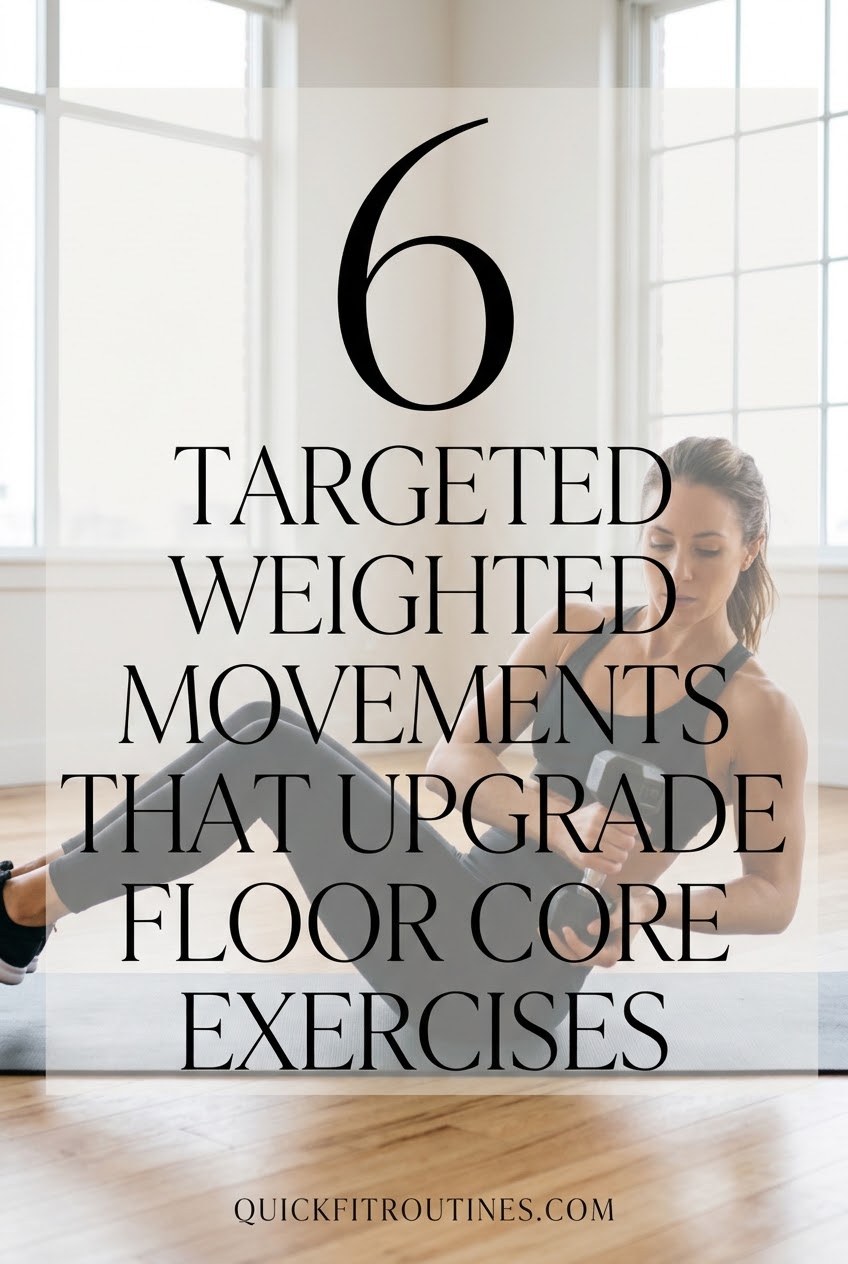
Finding a core routine that actually fits into a normal day is the whole reason I started keeping my home workouts simple. This dumbbell ab workout uses movements I can set up quickly with the equipment already sitting in my apartment.
The full session takes about 25 minutes including a short warm-up, changing, and putting the dumbbells away. It needs about two metres of floor space, a mat, and one pair of dumbbells. The noise level is quiet, which matters when your workout happens above someone else's ceiling.
Quick summary
- Eight dumbbell movements cover rotation, flexion, bracing, and stability.
- Each exercise works well in a small home setup.
- Start light and stop if you feel sharp pain, dizziness, chest pain, or unusual shortness of breath.
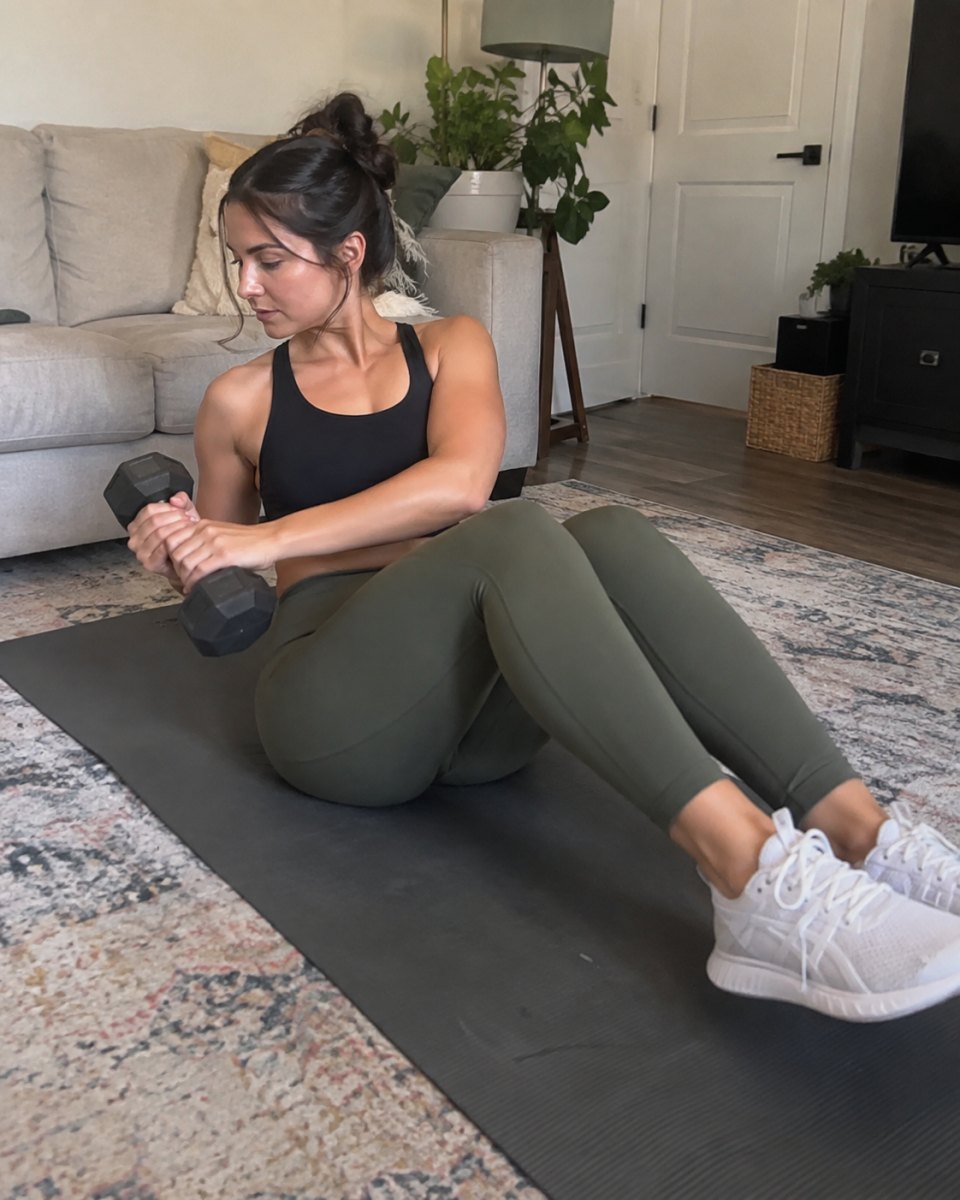
Dumbbell Russian Twist Pose
The dumbbell Russian twist was one of the first weighted core moves I kept returning to because the setup is almost nothing: sit down, grab one dumbbell, and start. The movement trains controlled rotation, with the dumbbell moving side to side instead of relying on speed. Controlled rotation matters more than chasing a heavier weight.
I have done this variation about 45 times in short sessions. My apartment notes say it needs roughly one metre of floor space, takes about three minutes including setup, and stays completely quiet. A beginner option is keeping the heels down instead of lifting the feet.
Small-space tip
Use a lighter dumbbell until the movement feels smooth. A weight you cannot control usually turns a simple exercise into a messy one.
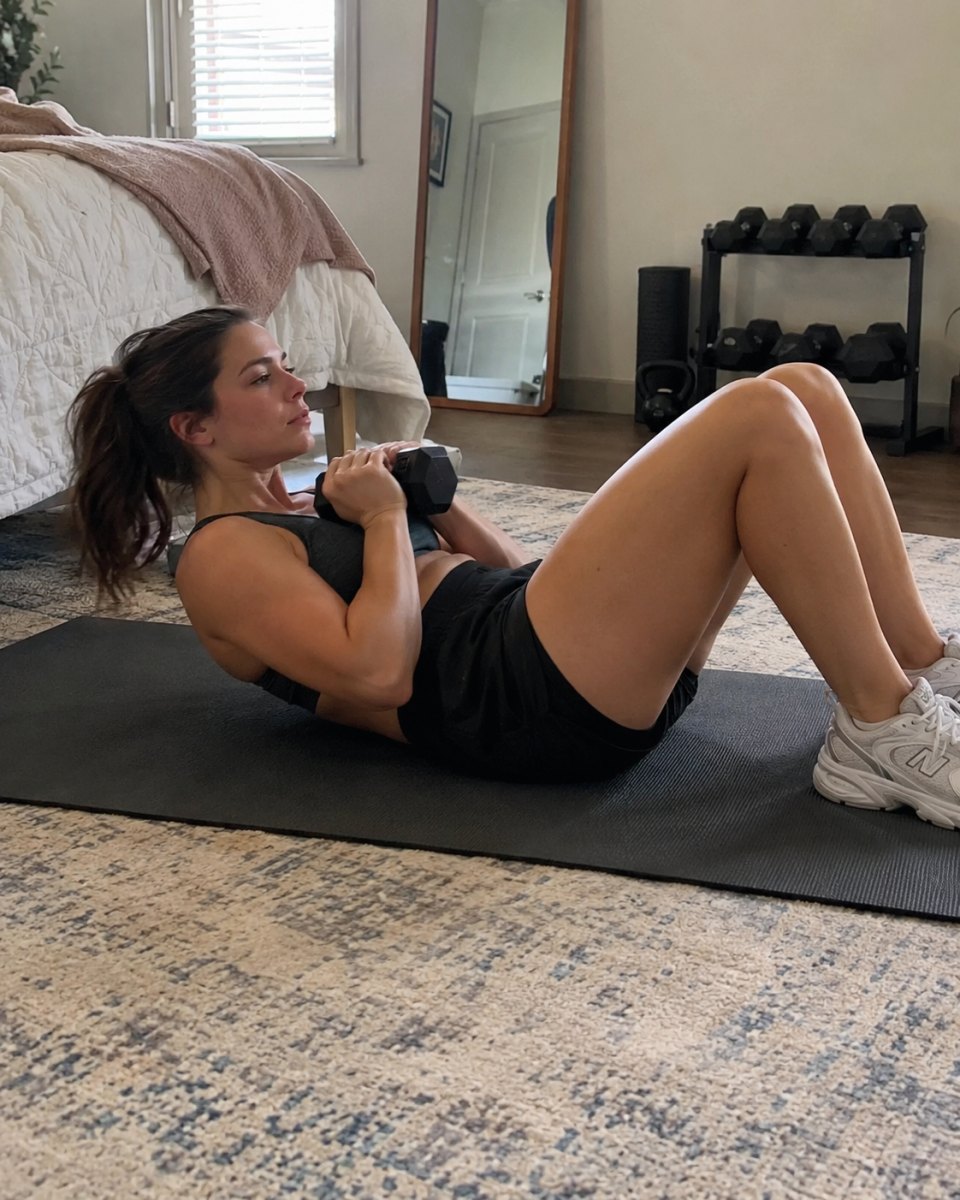
Weighted Crunch Exercise
Weighted crunches are useful when I want a straightforward core movement without rearranging the room. The dumbbell stays close to the chest, and the exercise stays slow. Simple loading makes it easy to track progress without adding complicated equipment.
This is a quiet floor exercise that takes about four minutes with rest included. I have repeated this version around 35 times because it is easy to restart after a busy week. I use a light dumbbell when returning after a break rather than pretending I never stopped.
Safety note
If an exercise creates sharp pain or joint pain, stop. Questions about pain, injuries, pregnancy, or returning after surgery belong with a qualified healthcare professional.
Dumbbell Side Bend Movement
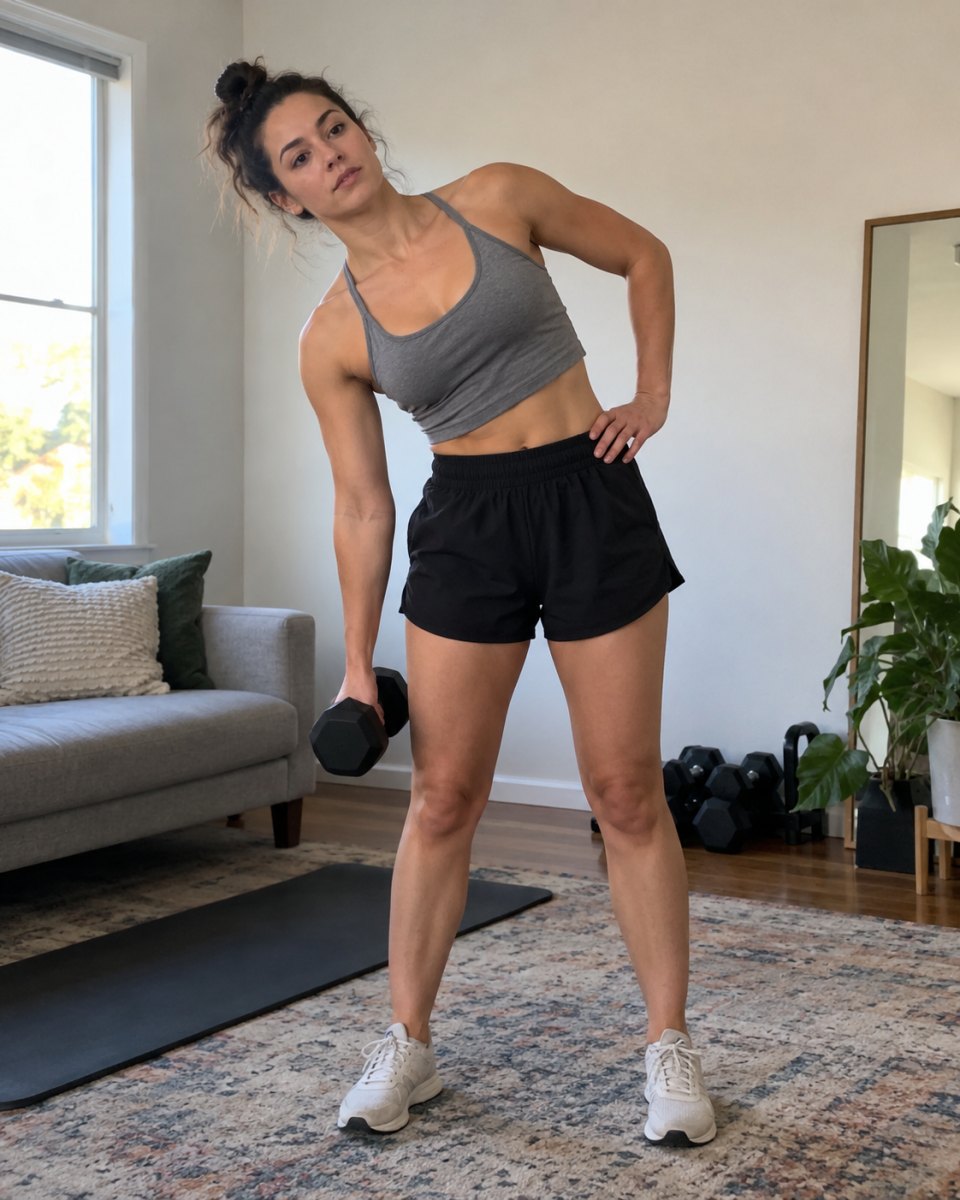
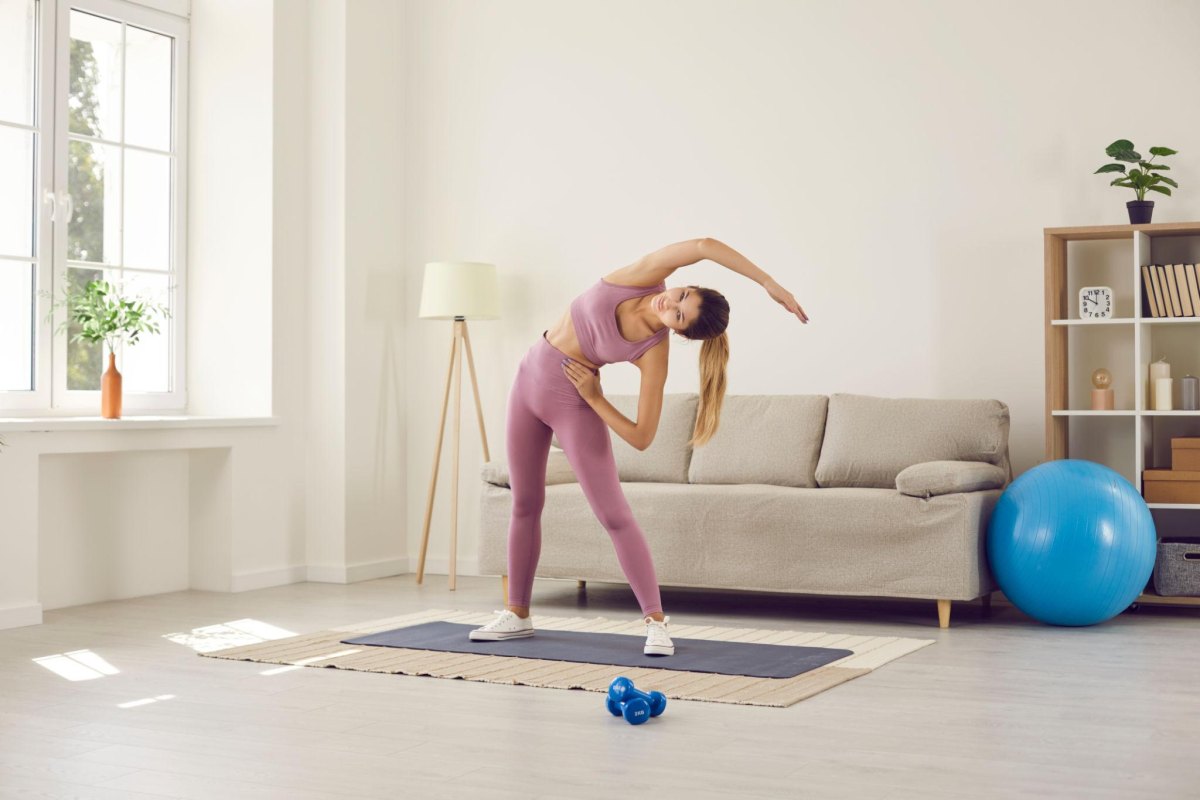
Dumbbell side bends are the standing option in this workout, which is handy when I want a break from the mat. The movement needs very little space and lets me keep my routine going when the floor is covered with laundry or life.
I have logged this one about 30 times. It takes around three minutes, needs less than one metre of standing room, and has a quiet noise rating. I keep the dumbbell manageable and focus on moving slowly rather than making the weight the main event.
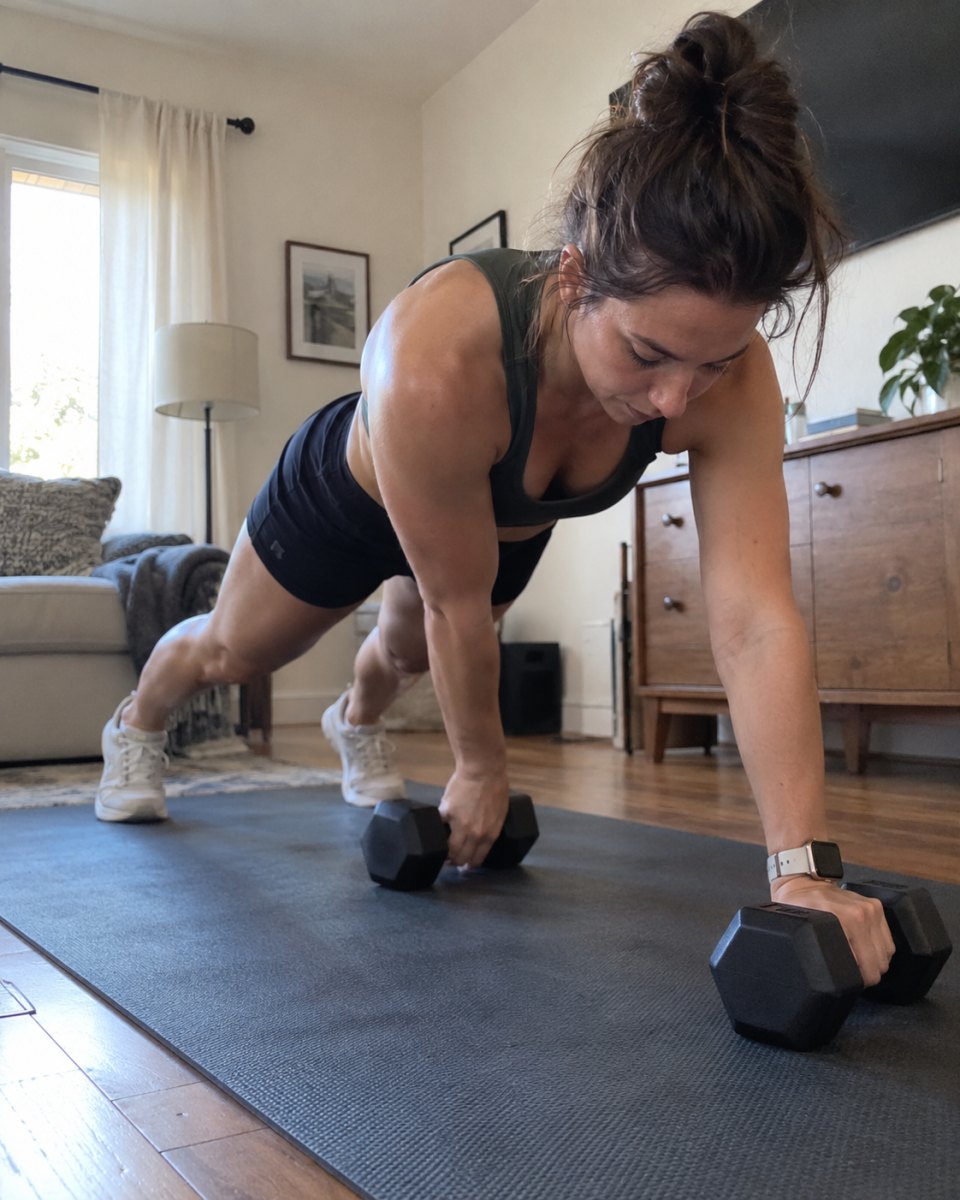
Dumbbell Plank Drag Position
The dumbbell plank drag is the one I save for days when I want a stronger bracing challenge. From a plank position, the dumbbell moves across the floor while the body tries not to wobble. Core stability is the main reason I keep it in the rotation.
This needs a little more room than the standing exercises: about two metres of floor space. I have completed it roughly 25 times, and the total time is about four minutes. Noise is usually quiet, although dropping the dumbbell is definitely not a friendly downstairs-neighbour activity.
Common mistake
I avoid making the drag a speed test. Slow and controlled is the version I can repeat.
Dumbbell Sit Up Variation
This dumbbell sit-up variation gives me a familiar movement with a small equipment change. Holding the weight adds a challenge, but it also means I pay attention to choosing a load I can handle comfortably.
I have repeated this version about 20 times. The real session time is five minutes with setup and rests, and the noise level stays quiet on a mat. Beginner consistency beats forcing a heavier dumbbell that makes the movement unpleasant.
Why I keep it
- Easy to understand.
- Needs minimal equipment.
- Fits short workouts.
Things to consider
- Requires controlled movement.
- Not every person enjoys sit-up patterns.
Dumbbell Leg Raise Exercise
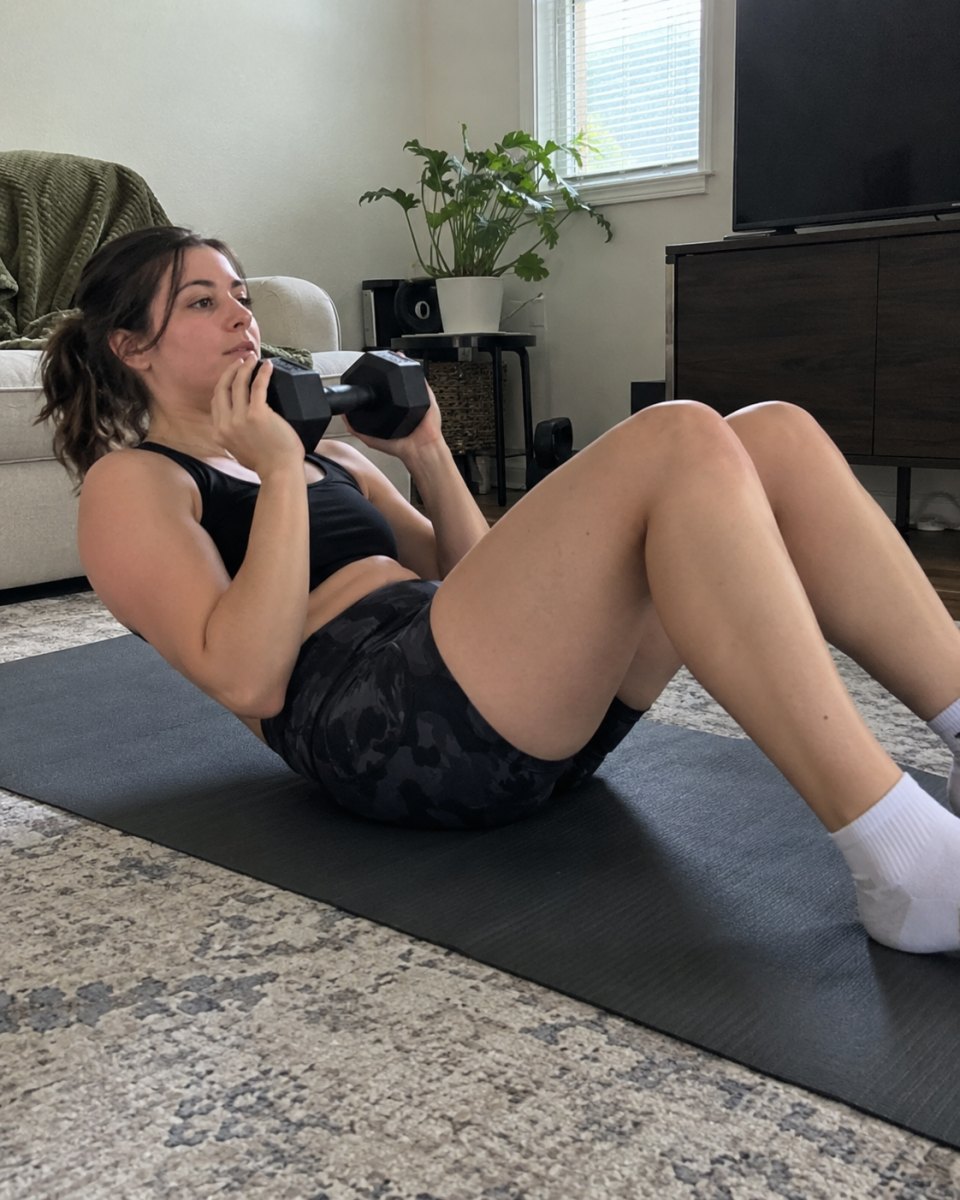
The dumbbell leg raise is the slow, steady section of my routine. I use a light dumbbell and focus on keeping the movement controlled rather than turning it into a race.
This takes about four minutes, uses around two metres of floor space, and creates very little noise. I have done it about 28 times because it works well on evenings when I only have a short window. Light equipment is enough here, so I would not buy a heavier set just for this movement.
Dumbbell Woodchop Motion
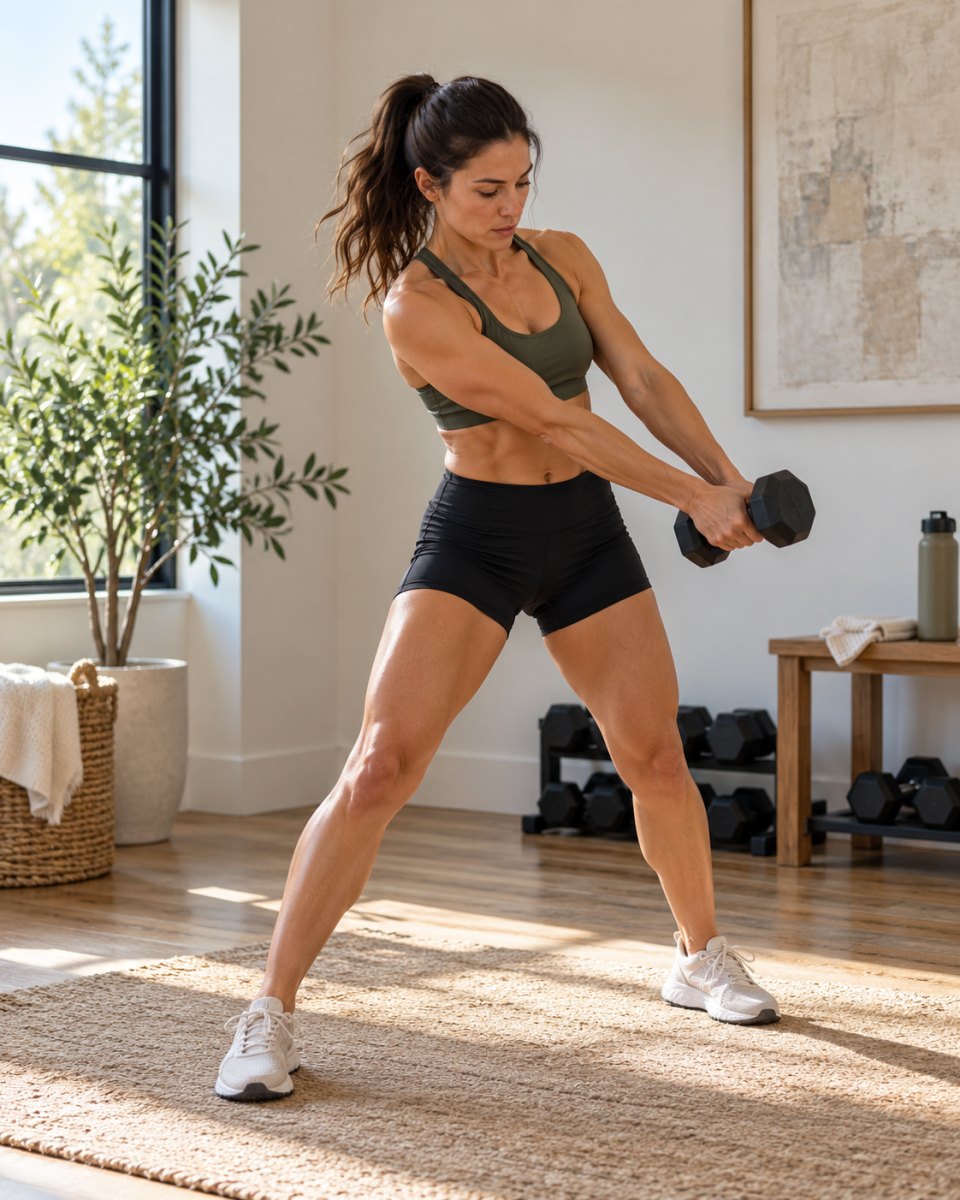
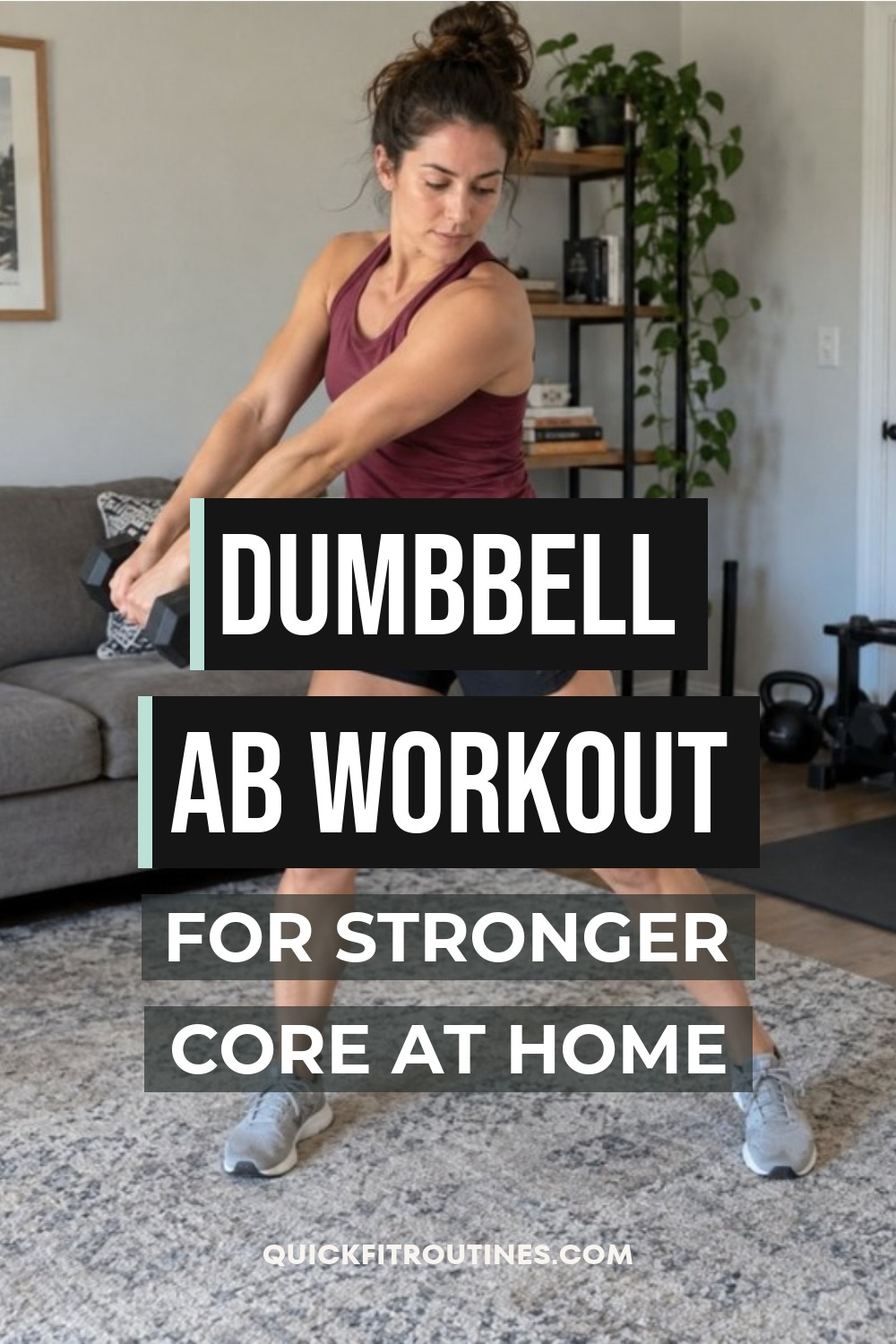
The dumbbell woodchop is the standing movement that makes this workout feel less like a floor routine. It uses a diagonal pattern that reminds me of everyday reaching and turning. Rotational strength is why I keep coming back to it.
I have completed this exercise around 40 times. It needs about two metres of space, takes four minutes, and stays quiet without jumping. A lighter dumbbell is enough to learn the movement without turning it into a rushed swing.
Train movements you can actually repeat, not just exercises that look impressive once.
Mara's workout log
Dumbbell Hollow Hold Pose
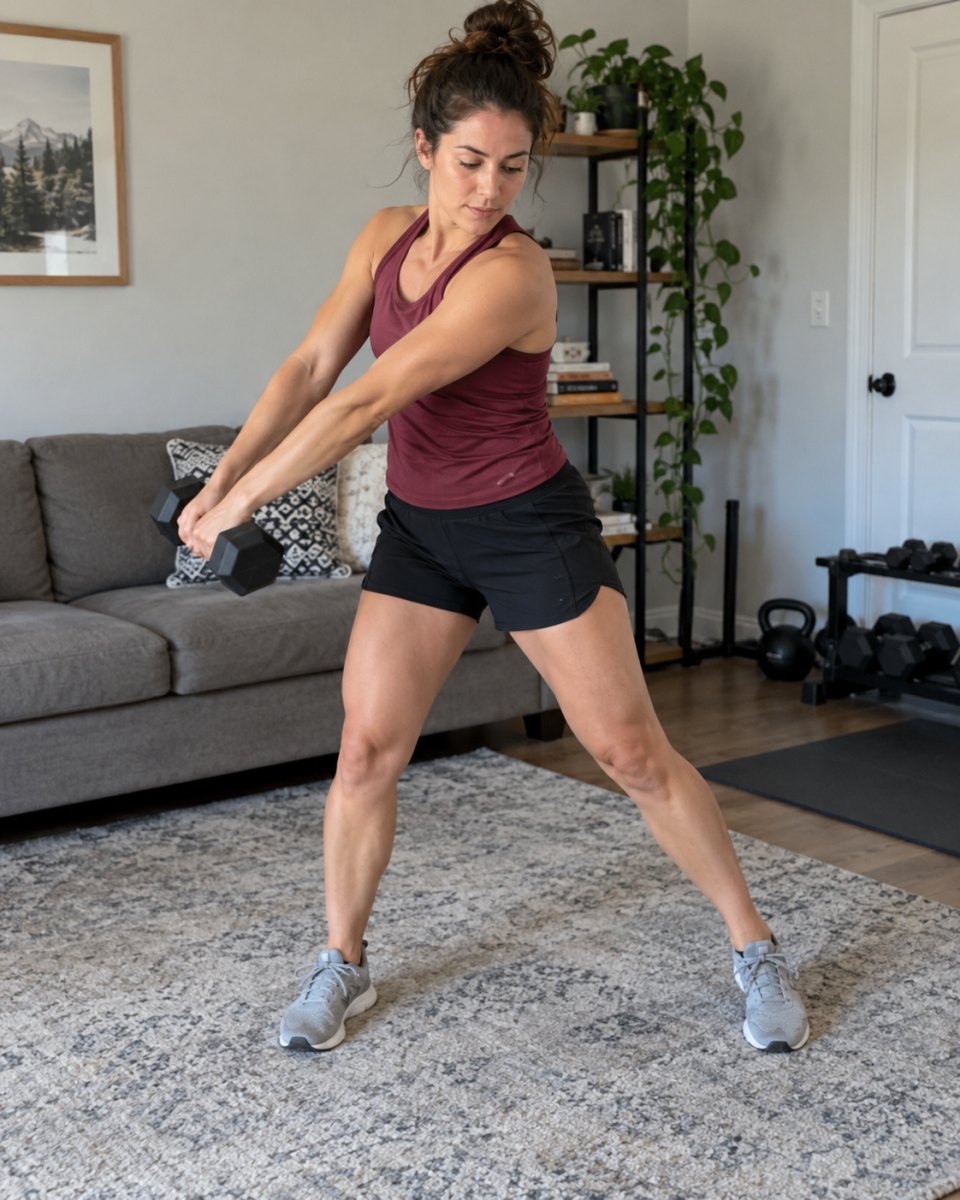
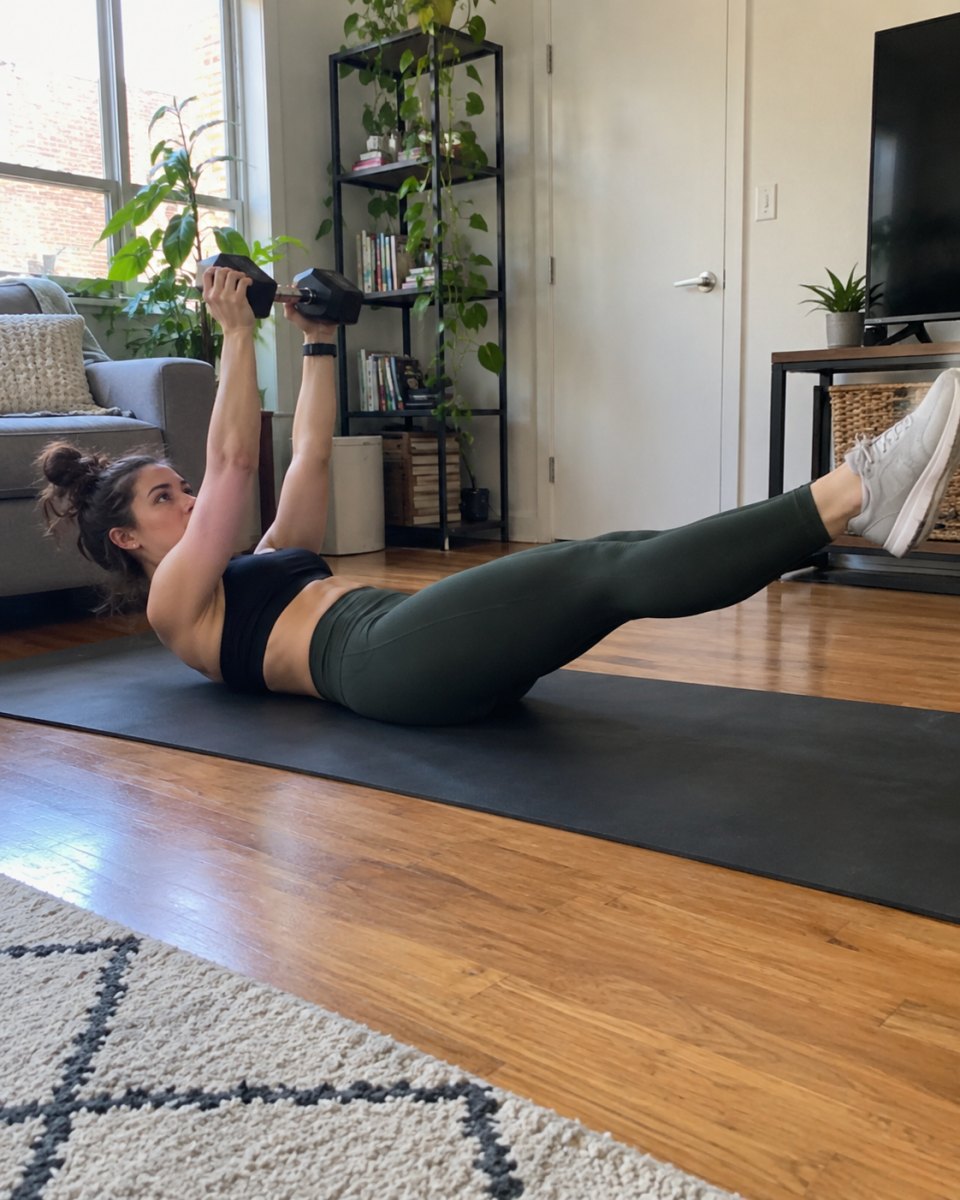
The dumbbell hollow hold is my final challenge because it asks for patience more than speed. Holding a position while managing a light weight creates a simple test of control.
I have repeated this one about 22 times. It takes around three minutes, needs a mat-sized area, and has a quiet noise rating. The no-equipment version is completely reasonable, so I would not buy dumbbells only for this exercise. Consistency over intensity is what keeps this one in my notebook.
More Pinterest Visuals